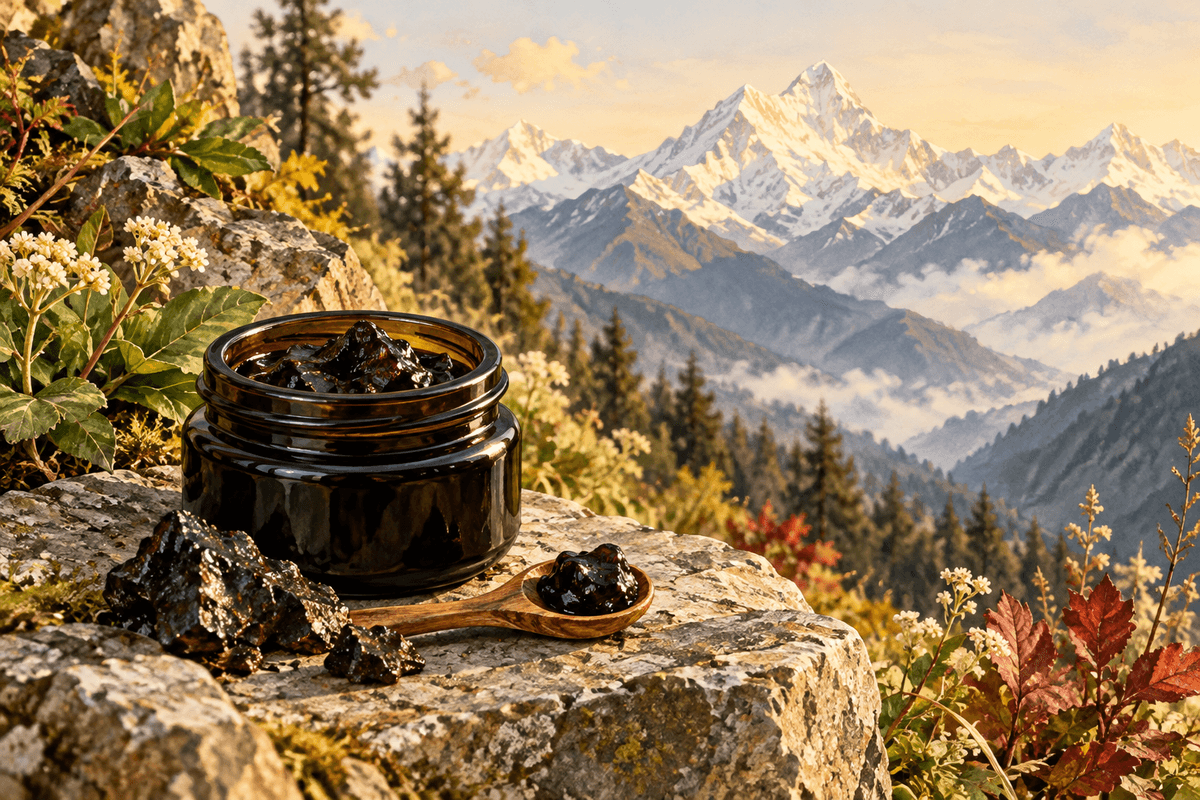
Shilajit is a dark, resin-like natural material associated with mountain regions and traditional Ayurvedic practice. Its long history is interesting, but tradition and modern clinical evidence answer different questions. Before trying it, look beyond dramatic promises about energy, hormones, or longevity.
What makes shilajit distinctive?
Shilajit is a complex mixture rather than a single vitamin or herb. Its composition can vary with its source and processing. Products may be sold as resin, capsules, or powders, and a high fulvic-acid percentage alone does not establish the identity, purity, or clinical value of the finished product.
Where the research is promising
Small human studies have investigated purified, standardized shilajit preparations. A placebo-controlled study in healthy middle-aged men reported changes in testosterone measures after 90 days. Other research has examined exercise-related muscle fatigue. These findings justify further investigation; they do not prove that any resin sold online will improve energy or treat a hormone problem.
The preparation, population, duration, and outcome all matter. A change in a laboratory measure is different from a demonstrated improvement in everyday symptoms or long-term health. Research on a particular branded extract should not be transferred automatically to another product.
Quality comes first
Ask for a lot-specific certificate of analysis from an identifiable independent laboratory. Useful testing should address identity and contaminants such as lead, arsenic, cadmium, mercury, and microbes. Raw, unpurified material is not a sensible shortcut. Words such as Himalayan, authentic, and ancient are not substitutes for testing.
A cautious decision process
If fatigue or reduced stamina is your concern, discuss the cause with a health care professional before shopping for a remedy. Bring the full label and your medication list. Because good safety data are limited for children, pregnancy, and breastfeeding, avoid self-prescribing shilajit in those settings. People with chronic illness or taking medicines should also seek individual guidance.
Choose a goal you can evaluate
If your clinician agrees a trial is appropriate, follow the product label and agree on a review point. Do not add several new supplements at once: that makes it harder to know what helped or caused a problem. Avoid treating a study dose as universal personal advice.
Questions welcome
Whole Health Center can help you compare labels and identify the quality questions to ask. Visit 122 Wall Street NW, Abingdon, or call 276-477-9013.
Sources
Pandit et al. — Purified shilajit and testosterone: https://pubmed.ncbi.nlm.nih.gov/26395129/
Keller et al. — Shilajit and fatigue-induced muscle changes: https://pmc.ncbi.nlm.nih.gov/articles/PMC6364418/
NCCIH — Ayurvedic Medicine: https://www.nccih.nih.gov/health/ayurvedic-medicine-in-depth
General education, not personal medical advice. Reviewed October 2026.